What Is Orthodontics for All Ages?
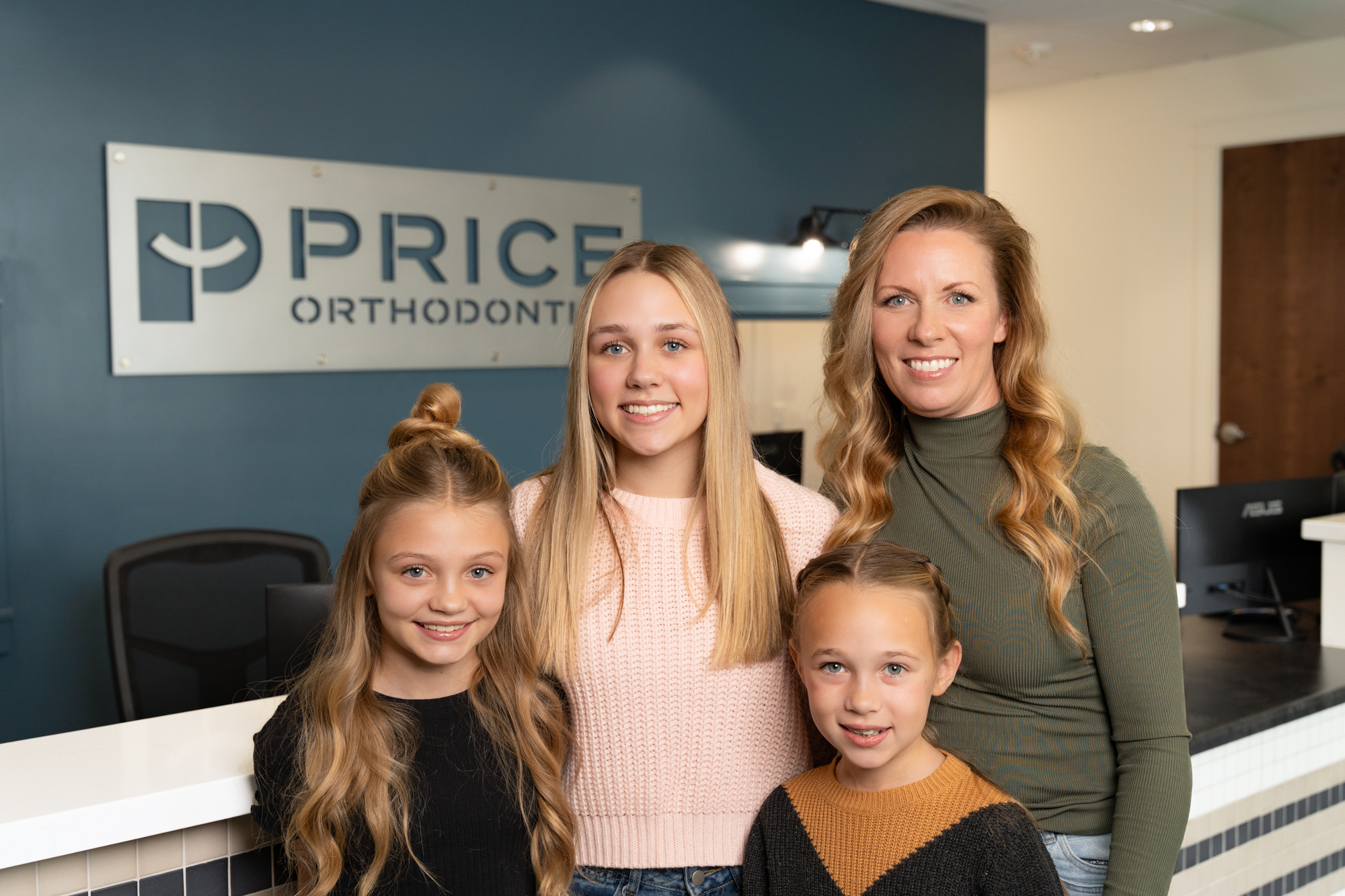
Orthodontics for all ages is the dental specialty that corrects misaligned teeth and jaws in patients from early childhood through the senior years. At Price Orthodontics, we treat patients of all ages because a healthy bite and confident smile matter at every stage of life. Modern treatment options make care accessible whether you’re 7 or 70.
The goals stay the same across age groups:
- Correcting bite issues like overbites, underbites, and crossbites
- Aligning teeth for a more even smile
- Supporting better long-term oral health
- Boosting confidence in how your smile looks and feels
Kids benefit from early guidance as their jaws grow. Teens often get treatment as permanent teeth come in. Adults can straighten their teeth without disrupting daily life, thanks to clear aligners and other low-profile options.
How Orthodontic Treatment Works at Every Age
Your smile journey follows five clear phases at every age: a free consult, an exam with digital scans and X-rays, a custom treatment plan, the active phase of moving teeth, and a retention phase to hold your new smile in place. Timing, appliance, and goals shift as you get older.
When Should Kids Start Treatment?
For children, early treatment (sometimes called Phase 1) typically starts between ages 7 and 10. At this stage, your orthodontist can guide jaw growth, create space for incoming teeth, and address bite issues before they become harder to fix. Catching these things early often makes the rest of the process simpler down the road.
What Do Teens Need?
Most teens begin treatment between ages 11 and 14, once most permanent teeth have come in. This is the classic age for metal braces, clear braces, or clear aligners. Growth is still happening, which makes tooth movement efficient and keeps the active phase moving along nicely.
Can Adults Get Treatment Too?
Adults absolutely get beautiful, healthy smiles. Treatment runs a little longer since the jaw is no longer growing, but the results are just as rewarding and they last for decades. Many adults choose clear aligners or clear braces for a discreet look that fits right into work meetings and social events. When your orthodontist, Dr. Cory Price, builds your custom plan, the option you pick is tailored to your daily life.
Typical timelines run anywhere from 12 to 24 months, depending on age, case complexity, and the option you choose.
Benefits of Orthodontics for Kids, Teens, and Adults
Straightening your smile does more than improve how your teeth look. The right alignment supports your bite, your oral health, and how you feel about smiling in photos.
Here’s what patients of all ages gain:
- A healthier bite. Properly aligned teeth reduce jaw strain, uneven wear, and chewing trouble.
- Easier cleaning. Straight teeth are simpler to brush and floss, which lowers your risk of cavities and gum issues.
- More confidence. A smile you love changes how you show up at school, work, and family events.
- Prevention for kids. Early treatment can stop bigger issues before they start, sometimes avoiding extractions or jaw work later.
- Long-term oral health for adults. Straightening teeth as an adult improves function and protects your smile for decades.
According to the American Association of Orthodontists, children should have a first orthodontic evaluation by age 7. That early check-in helps catch issues while the jaw is still growing and developing.
Comparing Treatment Options: Braces vs. Clear Aligners by Age
Choosing between metal braces, clear braces, and clear aligners often comes down to age, case complexity, and lifestyle. Here’s a quick side-by-side look:
How Do Metal Braces Work?
Modern metal braces are smaller and smoother than older versions. They handle complex bite corrections well and are a favorite for kids and teens who love picking colorful braces bands at each visit. Their strength makes them a reliable choice for the toughest cases.
What Are Clear Braces?
Clear braces work just like metal braces but use tooth-colored brackets. Teens and adults often choose them when they want the strength of braces with a more subtle look that blends in at work or school.
How Do Clear Aligners Work?
Clear aligners use a series of removable trays to shift your teeth into place. They’re a great fit for adults and responsible teens who want flexibility around meals, sports, and big events. Because they come out, brushing and flossing stay easy and your daily routine barely changes.
The best choice depends on your case. Dr. Cory Price will walk you through which option fits your smile, your schedule, and your goals.
Cost Factors for Orthodontic Treatment
Orthodontic treatment cost depends on three main things: the appliance type, your case complexity, and how long treatment takes. Clear aligners and braces sit in similar price ranges, while early treatment for kids may involve separate costs for Phase 1 and Phase 2. Our Roy office can give you a personalized estimate before you commit.
Several things shape the final number:
- Treatment type. Metal braces, clear braces, and clear aligners each have their own pricing.
- Case complexity. Minor spacing fixes cost less than full bite correction.
- Treatment length. Shorter cases typically cost less than longer ones.
- Age and treatment phase. Early treatment for kids is often quoted separately from later care.
We’re in-network with most insurances, and we offer flexible financing to keep treatment within reach. Options include interest-free in-house payment plans, a pay-in-full discount, and automatic withdrawals so payments stay simple. Families across Roy and Northern Utah can split treatment into predictable monthly amounts that fit a real budget.
Who Is a Candidate for Orthodontic Treatment?
Almost anyone with healthy teeth and gums can be a candidate for orthodontic care. Here’s how it breaks down by age:
- Children (around age 7). The AAO recommends a first orthodontic evaluation by age 7. Even if treatment isn’t needed yet, your orthodontist can monitor jaw growth and tooth development.
- Teens (ages 11-14). This is the most common time for treatment, with most permanent teeth in and growth still helping the process along.
- Adults (any age). If your teeth and gums are healthy, you can straighten your smile. Plenty of our adult patients start treatment in their 30s, 40s, 50s, and beyond.
Common conditions we treat at every age include:
- Crowding
- Gaps between teeth
- Overbite
- Underbite
- Crossbite
- Open bite
An exam with Dr. Price helps determine the right timing and approach for your smile. Coming in for a first visit is the surest way to know what your smile needs.
Frequently Asked Questions About Orthodontics for All Ages
Is it ever too late to get braces or aligners as an adult?
No, it’s not too late. Healthy teeth can be moved at any age, and adults make up a growing share of orthodontic patients. Clear aligners and clear braces are especially popular with adults across Roy and Northern Utah who want a discreet option that fits a busy lifestyle.
At what age should my child first see an orthodontist?
The American Association of Orthodontists recommends a first orthodontic evaluation by age 7. By this age, enough permanent teeth have come in for Dr. Price to spot developing bite issues, crowding, or jaw growth concerns. Early evaluation doesn’t always mean early treatment, but it sets your child up for the best timing.
How long does orthodontic treatment usually take?
Most treatment takes between 12 and 24 months, though some cases finish sooner and others take longer. The timeline depends on your age, the complexity of your case, and whether you choose braces or clear aligners. Wearing your aligners or following your braces care plan helps keep treatment on track.
Do clear aligners work as well as braces?
Yes, clear aligners can be just as effective as braces for mild to moderate cases. Digital scans help create a precise plan, and consistent wear (usually 22 hours a day) drives the smile you want. For more complex bite corrections, braces are sometimes the better fit, which is why a first visit matters so much.
Does orthodontic treatment hurt?
Treatment shouldn’t be hard on you. You may feel some pressure or soreness for a few days after appliances are placed or after adjustments, which is a sign your teeth are moving. Most patients find this very manageable, and modern brackets and aligners are designed to be more comfortable than ever.
Wherever you are in life, the right time to learn about your smile options is whenever you’re curious. Price Orthodontics has cared for smiles under the guidance of Dr. Cory Price, who stays current on the latest orthodontic research and continuing education. Whether you’re exploring care for yourself or your child, we put your smile first, and we’re here for your smile whenever you’re ready to learn more.